
This includes projects now completed, and others that no longer have QAIG member involvement, but are still active.
Rwanda and Eastern DRC
African Great Lakes Peace Trust
The Trust was laid down in July 2025. It had formerly supported peace building projects in East Africa, including helping fund workshops in Goma (DRC) to start refugees coping with their trauma and managing their resentments of the perpetrators. AGLPT also funded workshops in Rwanda enabling people with disabilities to build self esteem so that they could handle the discrimination they routinely face.
Support for the continuing work can be done via Friends Peace Teams or Bududa Learning Centre.
Kenya
Green Olive Trust UK
The Green Olive Trust UK closed at the end of 2025. This had been anticipated by Trustees, and the Trust had not taken on new project work or the sponsorship of new students. Funding to support the remaining nine students has been sent to Green Olive Foundation, Kenya to ensure the students can complete their courses by early 2028.
Green Olive Trust UK has enabled well over sixty High School and University students over the past decade. These young people have gone from strength to strength and have made profound positive impacts on the impoverished area where they grew up. News updates from past students who are pursuing interesting and worthwhile careers can be found here.
In addition, Green Olive Trust can also celebrate funding a Greenhouse Education project and the re-building of a primary school – details also on the website.
Contact details for Green Olive Trust Kenya : Dr Oscar Shamallah: shamalla.oscar@outlook.com
Kenya
Kenya Schools Project
The Kenya Schools Project worked in partnership with the Friends United Meeting African Ministries office in Kisumu, Kenya to support the 200+ Friends secondary schools and about 1000 primary schools in Western Kenya, to improve the academic standards of those that are less well-endowed, and to help them be more aware of the Quaker ethos with which they were founded.
Kenya
Huntingdon – Kitale Partnership
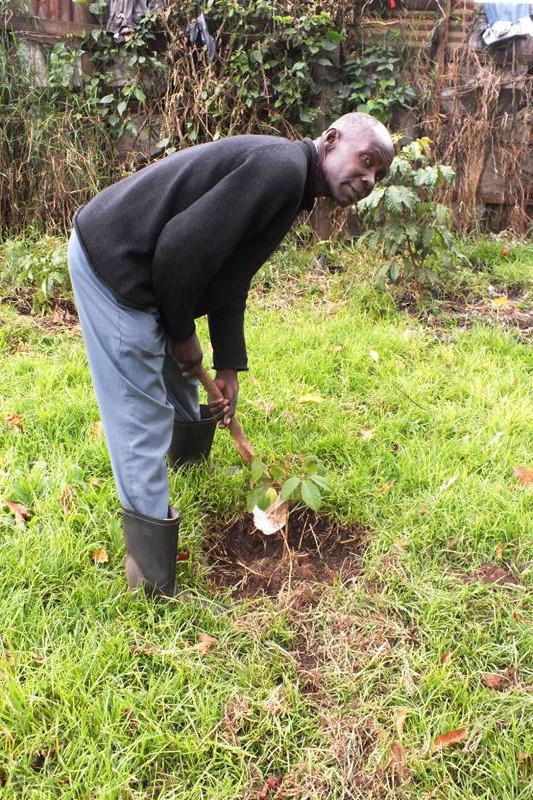
Huntingdon LQM and Friends Church Kitale are working together to reduce their carbon footprint. Huntingdon Friends are making ‘green’ financial savings by, for example, walking to town rather than driving; eating less meat; or using only rainwater to water the garden. Commitments are entered into a book of pledges and the money saved calculated. It is then transmitted to Kitale, via Sustainable Global Gardens, who work with Friends there to determine what varieties of trees should be planted. Savings of £249 have enabled the planting of over 1000 trees and reduced Friends’ collective carbon footprint by half a tonne of CO2 – and as the scheme continues to expand those same trees will provide food, wood, shade, prevent soil erosion and sequester CO2 for years to come.
Email: David Bale, Hazel Shellens
Kenya
The North Wales Area Meeting Kenya Link
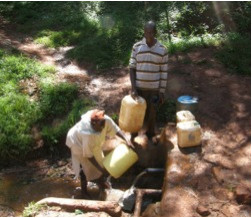
The North Wales Area Meeting Kenya Link began in 2004, following the FWCC Triennial in Auckland, when we formed a link with Kigama Monthly Meeting in Western Province. The aim was spiritual exchange. We also help support their AIDS orphans, raising funds for school uniforms, shoes and food. About 25 water filters have been installed for some of the AIDS widows, obviating the need for fuel for boiling: women walk miles to fetch water, negotiating a steep clay slope to a spring. We currently support four young people in practical further education and are fundraising for a large
Kenya
Friends School Mfangano (FSM)
This was built and funded as an independent school for orphans on an island in Lake Victoria by an individual British Quaker. It has 149 pupils from pre-school to early secondary. In July 2021, the school’s founders became Quakers and one is now studying Quakerism at Kaimosi Theological College. FSM is part of Bware Yearly Meeting. David Bale has a Travelling Minute from his Area Meeting to enable him to conduct an online tour of ministry across different Quaker traditions and the global divide between north and south to raise enough money to ensure the long-term sustainability of the school. Donations will be sent direct to Friends United Meeting in USA and passed on to FSM in line with Memoranda of Understanding that are still being worked out. Money is needed for the school’s feeding programme, its day-to-day running expenses and to purchase land for a sports field and a Quaker Camp for International Volunteers.
The story of how two Kenyan teachers conducting HIV/AIDS education in fishing communities around Lake Victoria have now become the proprietors of a Quaker School in a part of Kenya where there have never previously been any Quakers is told here.
Email: d.bale@live.com
Uganda
Mediation & Restorative Justice
Marian Liebmann visited Uganda in 1999 at the request of Grace Kiconco Sirrah’s Restorative Justice Initiative, providing training for criminal justice professionals in the run-up to the introduction of Community Service Orders. In 2002, hoping to enhance the use of Uganda’s Children Statute 1996, Save the Children asked Grace to write a manual to train Ugandans in victim-offender mediation; Marian visited again to provide training. In 2011 she provided mediation and restorative justice training to criminal justice professionals, and organizations in Northern Uganda helping those suffering from the effects of the Lord’s Resistance Army. In 2012 she returned to run a Training for Trainers course. For all these Grace was co-trainer.
Uganda
Anger Management with Art
In 2011 Marian Liebmann responded to a request from Grace Kiconco Sirrah, working former child abductees of the Lord’s Resistance Army, finding found that anger was still a big problem. She visited to run 3-day workshops on Anger Management with Art in three towns in Northern Uganda, Lira, Gulu and Kitgum, for groups varying in size and composition. 28 men and 40 women took part. Participants found using art materials helped them to express their thoughts and feelings. She returned in 2012 and ran follow-up workshops, finding that many people had turned their lives round and also influenced
Uganda
Chrysalis Youth Empowerment Network (CYEN)
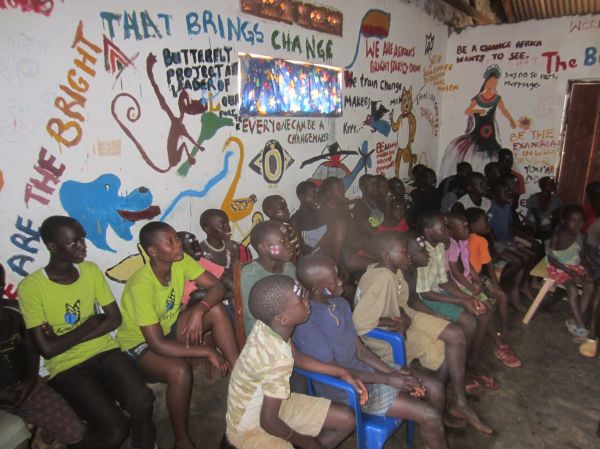
The Chrysalis Youth Empowerment Network (CYEN) is a UK charity that supports Chrysalis Uganda in running the Butterfly Project for young social entrepreneurs in Uganda, helping young people become changemakers in their communities – city slums and poor rural areas. There are Chrysalis Centres on the edge of a slum in Kampala and in the rural north. Recently, a unique secondary school has been built. The Chrysalis Secondary School in Lagwe Dola, Northern Uganda is now in its second year. It takes the best of the Ugandan national curriculum and supplements it with training in social entrepreneurship, current affairs and global challenges such as climate change and international relations.
David Bale (St Neots/Bamford Quaker Community) is a CYEN Trustee and Nick Jewitt (Bangor) an interested party.
https://www.cyen.online/ & https://www.chrysalisschool.org/
Ghana
Yen Daakye
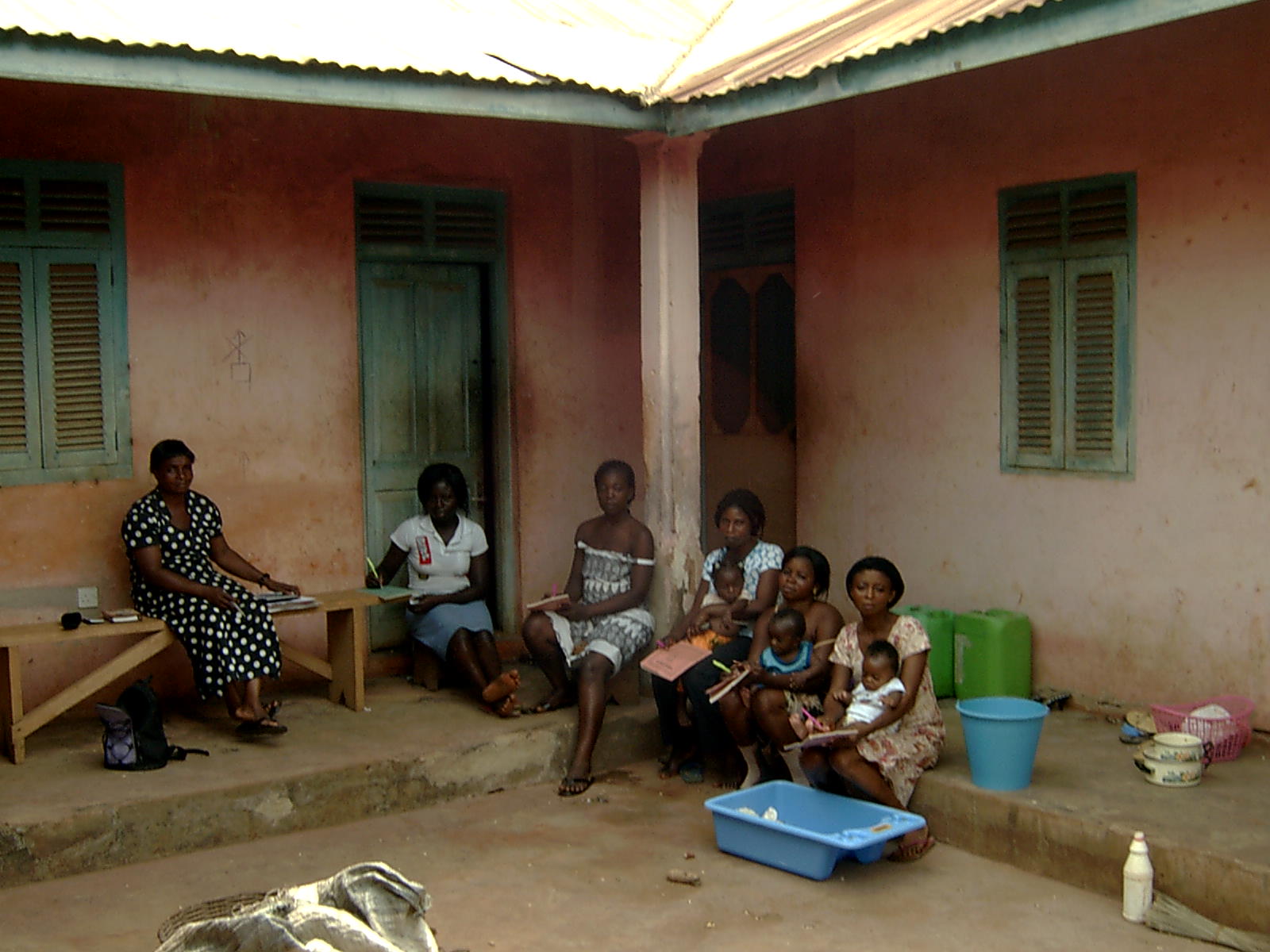
Yen Daakye (“our future”) is a microcredit programme started in 2009 under the auspices of Ashanti Development, a small UK-based charity working in the Ashanti region of Ghana and run in Europe by volunteers. AD has now provided microcredit loans to over forty Ashanti villages, enabling hundreds of women to their way out of poverty. The programme is wildly popular among Ashanti women and AD is constantly receiving requests to extend it to new villages.
Contact: Penny David, Ashanti Development
You can see interviews with some of the beneficiaries on https://www.youtube.com/watch?v=kCfqnTCJwUM
Website: https://ashantidevelopment.org/
Microcredit programmes – e-mail: penny.david@ashanti-development.org.uk
South Africa
Masambe
Masambe (“let’s get going”) is a micro-credit programme in Eastern Cape, South Africa, started in 2005 under the auspices of Oxford County Council, and now run by BEFSA, a small charity based in South Africa and Oxford. Until political interference brought it to a halt in 2010, Masambe was extremely successful, with at one time over 400 women on its programme. A generous donation by a British Quaker has enabled it to re-start in 2014 in the town of Alice. Masambe now has 20 women on the programme who have received loans and many are successfully developing their businesses. Some of them have had challenges especially during Covid but the collective group support each other well . During Covid they made 400 masks which were donated to Care Homes, hospital workers like porters and receptionist who were not supplied with PPE and schools. BEFSA continues to support the group. It was hoped there would be more women involved but developing it steadily seems to be working. The women always appreciate the support and often say they don’t know how they would have survived without that support.
Contact Details:
Website: https://befsa.org/
Email: catherineborien@befsa.org
Zimbabwe
Friends of Hlekweni
Initially, FoH supported the Hlekweni Friends Rural Training Centre, set up in 1967 and supported by Quakers around the world. Hlekweni’s mission was to give practical expression to Quaker testimonies in the most impoverished communities of Matabeleland, Zimbabwe, with a special focus on promoting reconciliation and nonviolence, and encouraging agricultural practices that enhance environmental sustainability. The Hlekweni community aimed to embody a commitment to equality, welcoming people from all backgrounds. The Centre closed in 2014, the concern having been laid down by Central and Southern Africa Yearly Meeting due to the unsustainable financial model for the centre in a country with ongoing major economic and political issues.
Since 2015, FoH has focussed on:
- supporting four primary schools in peri-urban Bulawayo
- funding support for the Zimbabwe Secondary Bursary scheme
- peace building
FoH works in close partnership with Quakers, peace churches , AVP Zimbabwe and other partners to redress economic injustice.
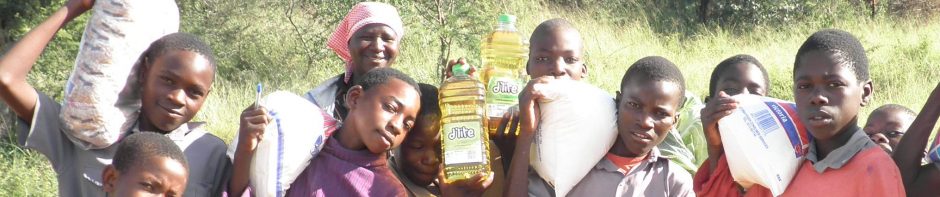
Over $US 1,000,000 has been forwarded to projects, including school meals schemes for over 2,000 students a day, bursaries for orphans in primary schools, re-usable sanitary pad packs, semi permanent classrooms, teacher accommodation and support for peacebuilding, particularly school Peace Clubs and Alternative to Violence courses.
Trustees decided to close the charity at the end of 2022. A closure visit in January 2023 enabled two Trustees to meet with all partners, bringing requested resources. Resources such as knitted goods, sewing equipment, books, stationery, refurbished laptops etc will continue to be sent.
Friends of Hlekweni is a Quaker Recognised Body.
http://friendsofhlekweni.org.uk
 Quaker Africa Interest Group (QAIG)
You must be logged in to post a comment.